Skip to content
A LITTLE MORE THAN A STORY

Read. Cuddle. Talk a little.

Resources for every adventure: conversation starters, short games, and simple words of support.

Read and discover together

Choose what suits your family today. You can always come back to the rest another time.

  1. Read at your own pace

    Explore the illustrations, pause, and return to favourite pages. You can share one story over several evenings.

  2. Talk about the characters

    Choose one question from the parent page. Your child can answer in words, point to an illustration, or imagine what might happen next.

  3. Try a little game

    Each book ends with a game connected to the adventure. Try it when you feel like playing, or remember the story during everyday moments.

The Little Steam Train
A little pause

Pausing before taking action

The Little Steam Train · 3–7 years

Original resource from the book · Story in Ukrainian
Для батьків Маленька пауза перед дією Ця казка вчить помічати поспіх і зупиняти рух на мить, щоб подивитися довкола й обрати наступний крок. Вухань зупиняє власні лапки, хоча йому все ще хочеться мчати. Спосіб Вуханя «Стоп» — зупиняю ручки й ніжки. Роблю маленьку паузу. Дивлюся, що відбувається. Обираю, що зробити далі. Поговоріть після читання 1. Що поспішала зробити лапка Вуханя? 2. Як він зупинив її, коли сказав «Стоп»? 3. Що зайчик помітив після паузи? Можна обрати одне запитання або запропонувати дитині показати відповідь на ілюстрації. Гра «Пих-пих — стоп!» Ходіть по кімнаті, як маленькі паровики: «Пих-пих-пих!» Коли хтось каже «Стоп», зупиніть ноги й руки. Озирніться та оберіть, куди рушити далі. По черзі подавайте сигнал. Потім запропонуйте дитині самій обрати момент для своєї зупинки. Підказка дорослим Тренуйте паузу у спокійній грі. Показуйте приклад: «Моя рука вже тягнеться. Стоп. Спершу подивлюся». Підтримуйте конкретну дію: «Ти зупинив ручку й перевірив». Дитині може знадобитися ваша підказка. Одне читання не робить навичку автоматичною. Хотіти мчати можна. Маленька пауза допомагає обрати наступний крок.
Original resource from the book · Story in English
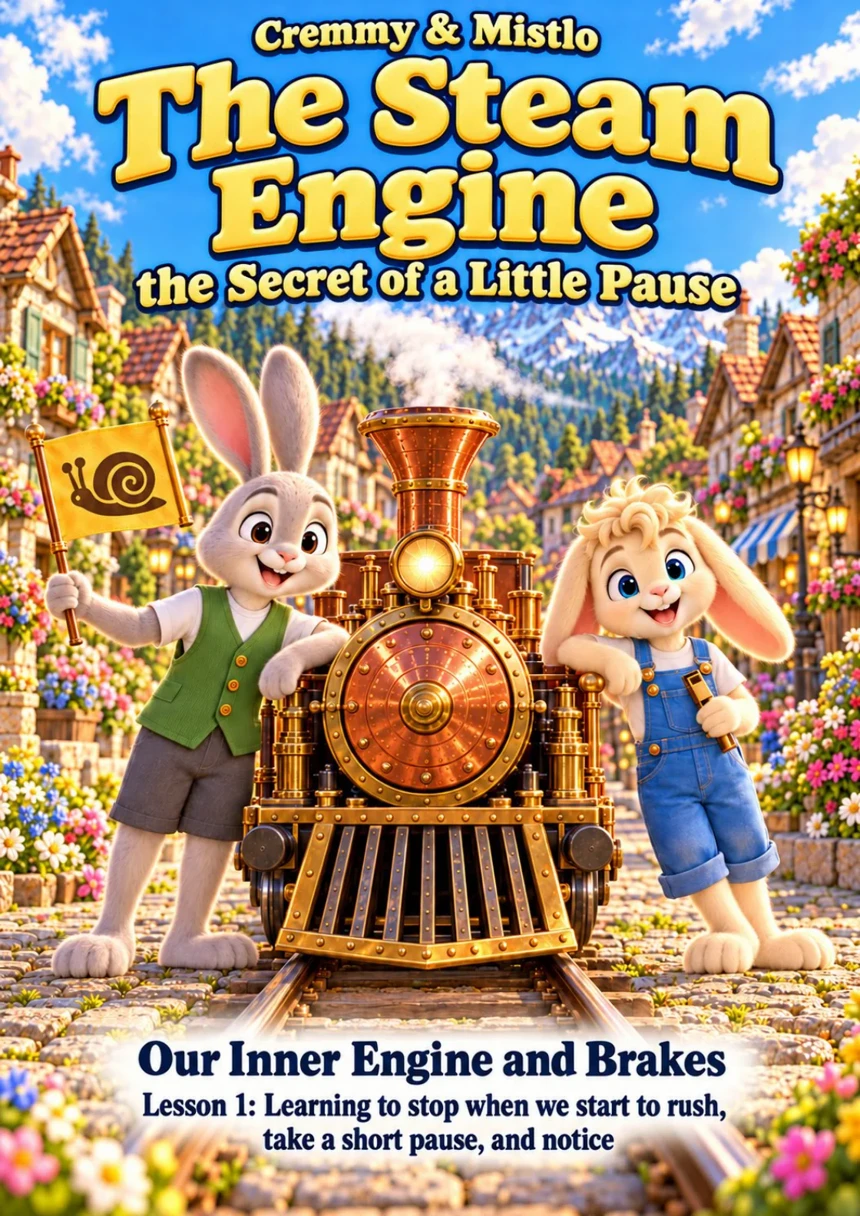
For Parents A Little Pause Before Acting This story helps children notice when they’re rushing and stop moving for a moment, so they can look around and choose what to do next. Mistlo stops his own paws even though he still wants to race ahead. Mistlo’s Way “Stop.” I stop my hands and feet. I take a little pause. I look at what’s happening. I choose what to do next. Talk About the Story 1. What was Mistlo’s paw in such a hurry to do? 2. How did he stop his paw when he said, “Stop”? 3. What did Mistlo notice after he paused? You can choose just one question, or invite your child to show you the answer in an illustration. The “Chug-Chug—Stop!” Game Walk around the room like little steam engines: “Chug-chug-chug!” When someone says, “Stop,” stop your feet and hands. Look around and choose where to go next. Take turns giving the signal. Then invite your child to choose a moment to stop on their own. A Tip for Grown-Ups Practice pausing during calm play. Show your child how: “My hand is already reaching. Stop. I’ll look first.” Offer specific encouragement: “You stopped your hand and checked.” Your child may need a reminder from you. Reading the story once won’t make this skill automatic. It’s okay to want to rush. A little pause helps us choose what to do next.
The Misty Forest
Feelings

Recognising feelings and supporting each other

The Misty Forest · 3–7 years

Original resource from the book · Story in Ukrainian
Для батьків Почуття залишають підказки Ця казка допомагає розпізнавати радість, сум і здивування. Зайчики вчаться помічати підказки у подіях, словах, виразах обличчя й рухах, називати або показувати почуття та підтримувати одне одного. Поговоріть після читання 1. Як Пухнастик показував свою радість? 2. Чому Вухань засумував? Як брат підтримав його? 3. Що здивувало зайчиків? Як змінилися їхні обличчя? Достатньо одного запитання. Дитина може відповісти словом, жестом або показати на ілюстрації. Маленька гра «Що відчуває зайчик?» Візьміть м’яку іграшку. Розіграйте одну подію: зайчик почув дзвіночок, загубив малюнок або побачив ходячий пеньок. Запитайте: «Що він може відчувати?» По черзі називайте чи показуйте почуття. Якщо відповідь інша, запитайте, що дитина помітила. Фраза для щоденного життя «Мені сумно. Побудеш зі мною?» Підказка дорослим Запитуйте про почуття дитини й уважно слухайте відповідь. Покажіть власний приклад: «Я радію, що ми разом». Коли дитина сумує, побудьте поруч — не обов’язково одразу веселити її. Різні люди виражають почуття по-різному. Усмішка й рухи — підказки, тому краще також запитати. Кольори кристалів — казкова умовність. Радіти, сумувати й дивуватися можна. Своє почуття можна назвати або показати.
Original resource from the book · Story in English
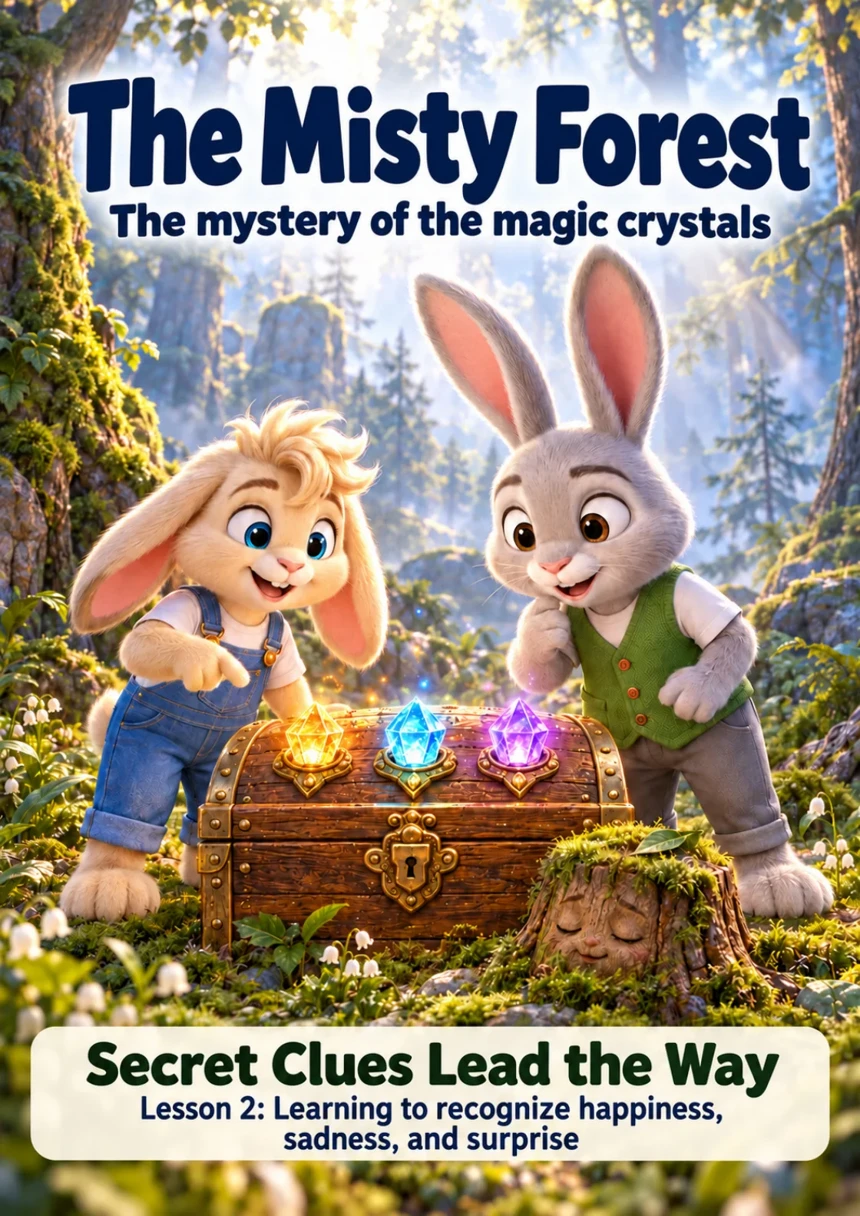
For Parents Feelings Leave Clues This story helps children recognize happiness, sadness, and surprise by noticing what happens, how a character moves, and what the character says. Cremmy feels happy when he hears the flower ring, Mistlo feels sad about his lost drawing, and the walking stump surprises them both. The brothers show and name their feelings. The Bunnies’ Way I notice what happened. I look closely at faces and movements. I name or show how I feel. If I want to understand someone else, I ask: “Are you feeling happy?” “Are you feeling sad?” “Are you surprised?” Talk About the Story How did Cremmy show that he was happy? What made Mistlo feel sad? What did Cremmy do? What surprised the brothers? How did their faces and movements change? You can choose just one question, or invite your child to show you the answer in an illustration. For a younger child, a gesture, a look, or a single word is enough. The “How Does the Bunny Feel?” Game Take a stuffed animal and act out a little scene: the bunny hears a cheerful bell, loses a favorite drawing, or sees a stump that can walk. Show how the bunny moves and what his face looks like. Ask, “What might he be feeling?” Your child can name the feeling or show it. If needed, offer two choices: “Is he feeling happy or sad?” Take turns playing the bunny and looking for clues. If your child suggests a different feeling, ask what they noticed. A Tip for Grown-Ups Name your own feelings in everyday situations: “I’m happy we’re playing together,” “I’m sad the drawing got lost,” “I’m surprised—I wasn’t expecting that.” Ask about your child’s feelings: “Are you feeling sad?” Give them a chance to agree, disagree, or show you how they feel. Acknowledge what your child noticed: “You noticed that Mistlo’s shoulders drooped and he went quiet.” If your child is sad, you can simply stay close. There’s no need to cheer them up right away or ask them to smile. The crystal colors are specific to this story. In real life, feelings don’t have fixed colors. Your child may need a prompt from you. Recognizing feelings won’t become automatic after one reading. It’s okay to feel happy, sad, or surprised. You can name your feelings or show them.
The Starlight Fruit
Kindness

Finding things to enjoy while waiting

The Starlight Fruit · 3–7 years

Original resource from the book · Story in Ukrainian
ДЛЯ БАТЬКІВ • «Зоряний фрукт» • Урок 3 Вчимося чекати бажаного Поясніть дитині: «Пухнастик хотів фрукт одразу. Але рослині були потрібні догляд і час. Поки вона росла, брати гралися. Ти теж можеш дуже чогось хотіти й засмучуватися. Я допоможу тобі дочекатися». Поговоріть після казки «Чому фрукт не виріс одразу? Що робили зайчики, поки чекали? А чого тобі зараз хочеться дочекатися?» Вислухайте відповідь без підказки «як правильно». Коли дитина каже: «Хочу зараз!» 1. Назвіть бажання й почуття. «Ти хочеш на гойдалку. Тобі прикро, що ще не твоя черга». Якщо дитина плаче, спершу побудьте поруч, запропонуйте обійми. Пояснюйте, коли вона трохи заспокоїться. 2. Дайте зрозумілий орієнтир. «Покатаєшся після цієї дівчинки» або «Коли задзвенить таймер, я закінчу й пограю з тобою». Виконуйте домовленість. Якщо відповідь «ні», не замінюйте її обіцянкою «потім». 3. Допоможіть обрати заняття. «Поки чекаємо, порахуємо пташок чи вигадаємо пригоду зайчиків?» Покажіть власний приклад: «Я теж чекаю. Поки що почитаю». 4. Помічайте зусилля. «Ти хотів відкрити одразу, але дочекався сигналу. Що тобі допомогло?» Дозвольте сумувати чи сердитися; не вимагайте чекати з усмішкою. Мінігра «Поки фрукт дозріває» 3 хвилини. Потрібні папір, олівці й таймер. 1. Разом намалюйте фрукт і накрийте його аркушем. Домовтеся: «Відкриємо після сигналу». Для першої спроби поставте таймер на 20-30 секунд. 2. Дитина обирає, чим зайнятися: пострибати як зайчик, знайти три жовті предмети або намалювати листочок. Долучіться до гри. 3. Після сигналу відкрийте малюнок і розфарбуйте фрукт золотим, рожевим та блакитним. Запитайте: «Чим було цікаво займатися, поки ми чекали?» Якщо дитині важко, зупиніться й підтримайте її. Наступного разу спробуйте коротший час, без докорів. Нагадуйте: «Я поруч. Разом знайдемо, чим зайнятися, поки чекаємо».
Original resource from the book · Story in English
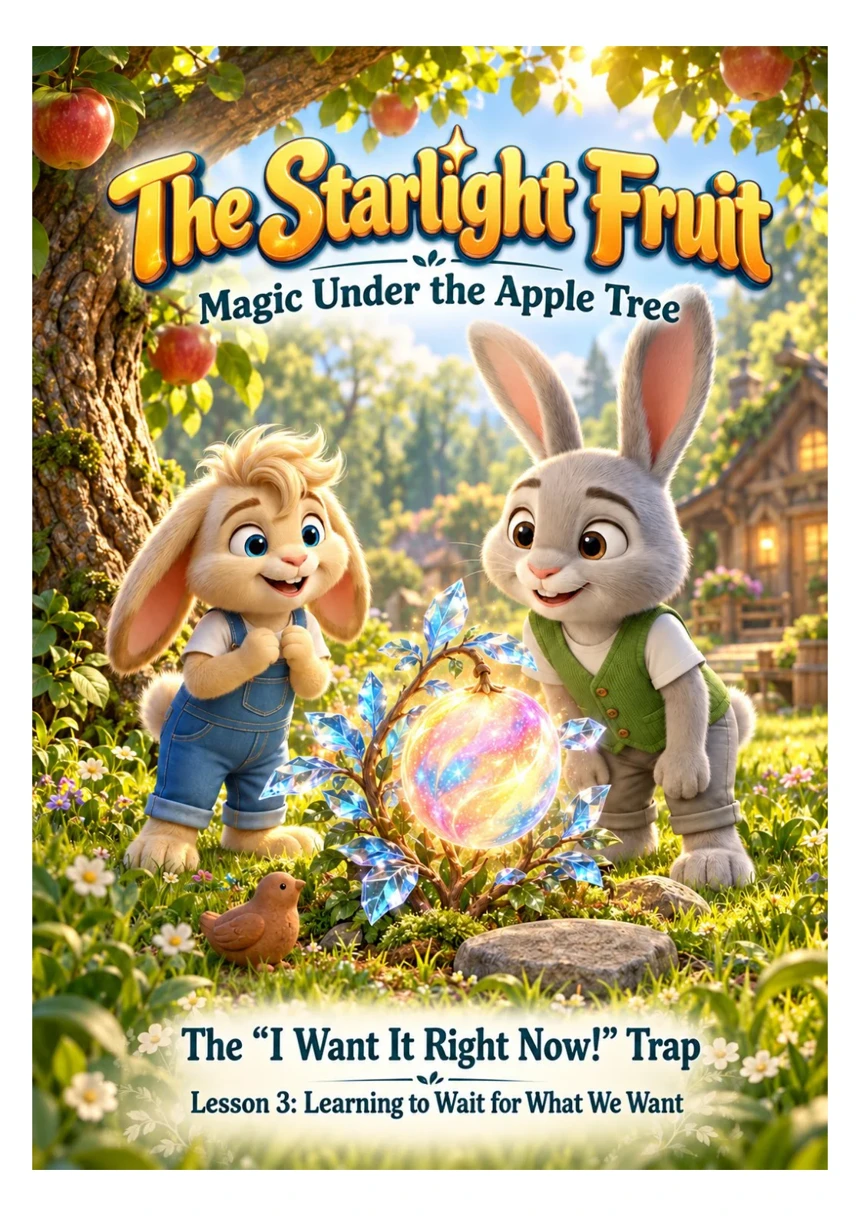
For Parents Learning to Wait for What We Want Explain to your child: “Cremmy wanted the fruit right away. But the plant needed care and time. The brothers played while it grew. You can really want something and feel upset too. I’ll help you wait.” Talk About the Story “Why didn’t the fruit grow right away? What did the bunnies do while they waited? What’s something you’re waiting for right now?” Listen to your child’s answer without steering them toward the “right” response. When Your Child Says, “I Want It Now!” Name what they want and how they feel. “You want a turn on the swing. You’re upset because it isn’t your turn yet.” If your child is crying, stay close first and offer a hug. Explain once they’ve calmed down a little. 1. Explain when the wait will end. “You can have a turn after this girl,” or “When the timer rings, I’ll finish what I’m doing and play with you.” Keep your promise. If the answer is “no,” don’t turn it into a promise of “later.” 2. Help them choose something to do. “While we wait, would you rather count birds or make up an adventure for the bunnies?” Set an example: “I’m waiting too. I’ll read while I wait.” 3. Notice their effort. “You wanted to open it right away, but you waited for the signal. What helped you?” Give them room to feel sad or angry; don’t expect them to wait with a smile. 4. The “While the Fruit Ripens” Game 3 minutes. You’ll need paper, pencils, and a timer. Draw a fruit together and cover it with a sheet of paper. Agree: “We’ll uncover it when the timer rings.” For the first try, set the timer for 20–30 seconds. 1. Your child chooses something to do: hop like a bunny, find three yellow things, or draw a leaf. Join in the game. 2. When the timer rings, uncover the drawing and color the fruit gold, pink, and light blue. Ask, “What did you enjoy doing while we waited?” 3. If your child finds it hard, stop and offer support. Next time, try a shorter wait, without scolding. Remind them: “I’m here. Together, we’ll find something to do while we wait.” 10 For Parents
The Bunny Aviators
Kindness

Noticing tiredness and making time to rest

The Bunny Aviators · 3–7 years

Original resource from the book · Story in Ukrainian
Для батьків Коли батарейка сіла Ця казка вчить помічати втому, говорити про потребу в паузі й повертатися до улюбленої справи після відпочинку. Брати також вчаться поважати потребу одне одного перепочити. Поговоріть після читання 1. Як лапки й очі підказували зайчикам, що вони втомилися? 2. Що допомогло братам відновити сили? 3. Що можна сказати, коли ще хочеться гратися, але вже потрібна пауза? Достатньо одного запитання, яке зацікавить дитину. Можна відповідати словами, жестами або показувати на ілюстрацію. Маленька гра «Моя батарейка» Намалюйте три батарейки: повну, наполовину заповнену й майже порожню. Запропонуйте дитині показати, яка схожа на її сили зараз: «Як почуваються твої ручки, ніжки й очі?» Потім разом оберіть відпочинок: затишно посидіти, полежати під пледом або зробити паузу в грі. Фраза для щоденного життя «Я втомився. Мені потрібна пауза». Підказка дорослим Допомагайте помічати втому й організовуйте паузи, навіть коли дитина ще не вміє про них попросити. Показуйте власний приклад: «Я теж втомився й трохи відпочину». Мрія може зачекати. Відпочинок — частина пригоди.
Original resource from the book · Story in English
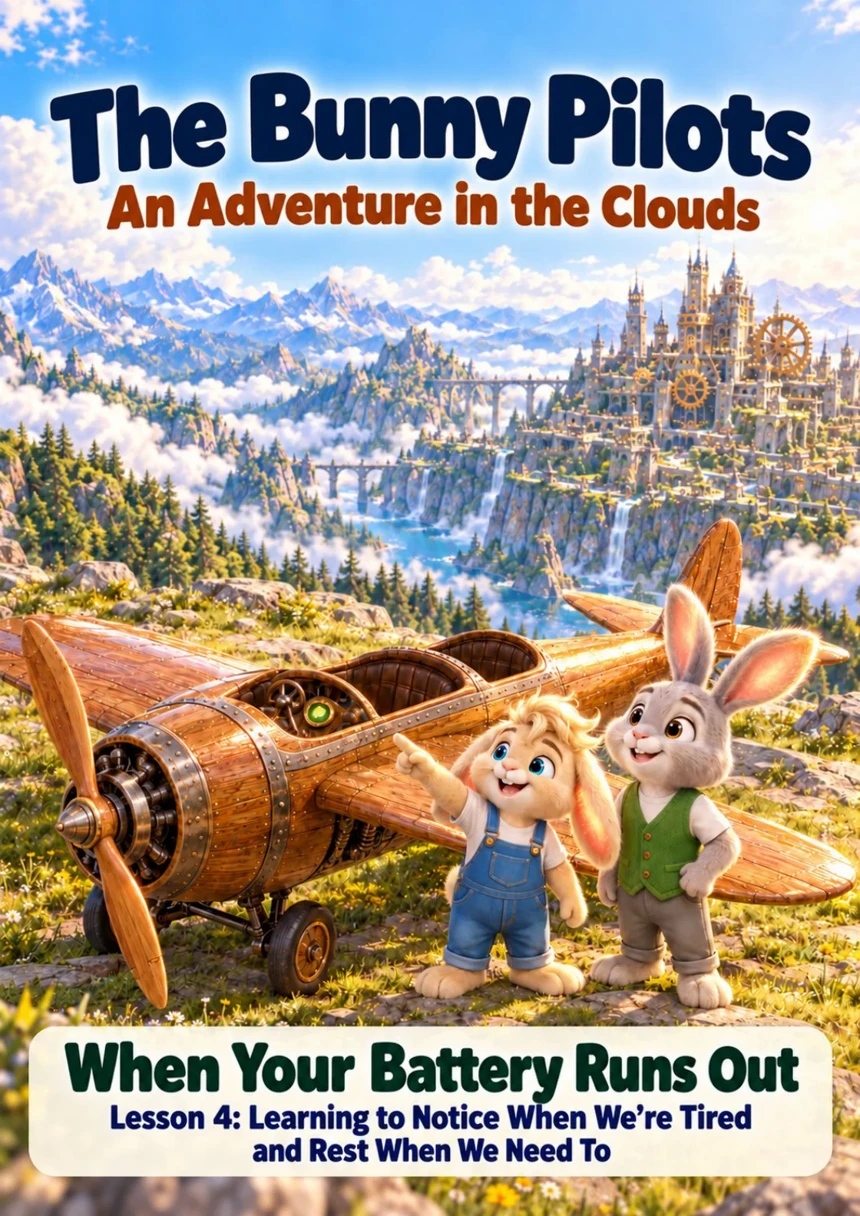
For Parents When Your Battery Runs Out This story helps children notice when they’re tired, say when they need a break, and return to a favorite activity after resting. The brothers also learn to respect each other’s need for rest. Talk About the Story 1. How did the bunnies’ paws and eyes tell them they were tired? 2. What helped the brothers get their energy back? 3. What can you say when you still want to play but need a break? One question that interests your child is enough. They can answer with words or gestures, or by pointing to an illustration. The “My Battery” Game Draw three batteries: one full, one half full, and one almost empty. Ask your child to point to the one that shows how much energy they have right now: “How do your hands, feet, and eyes feel?” Together, choose a way to rest: sit somewhere cozy, lie under a blanket, or take a break from playing. An Everyday Phrase “I’m tired. I need a break.” A Tip for Grown-Ups Help your child notice when they’re tired, and make time for breaks even if they don’t yet know how to ask for one. Set an example: “I’m tired too. I’m going to rest for a little while.” Dreams can wait. Rest is part of the adventure. 11 For Parents

Questions from parents

What ages are the stories for?

They are mainly for children aged 3–7 to share with a grown-up. Follow your child’s interests: you can explore the pictures or read a little at a time.

Are reading and PDFs free? Do I need an account?

All stories currently in the library are free to read and download, with no account needed. Supporting the author is optional and is never required to access these stories.

Can I choose a different language for the book?

Yes. Ukrainian and English editions are available. Choose the book’s language on its page or in the reader, independently of the website language.

How do I read in full screen?

Open a story and select the four-corner icon next to ×. The panels will disappear; tap the page or select ☰ to bring the controls back. On a computer, F toggles the mode and Esc exits it. The address bar may remain visible if your browser does not support full screen.

How do I print a book?

Download the PDF and print it on A4 paper. Select A4 and “Fit to page” in your print settings.

How do I use the parent page?

After the story, choose one question or short game from the final page. Talk about what the characters did and how they felt. You can also find these resources in the “For parents” section.

Can we listen to the stories?

Audio editions are not available yet. When they are ready, links will appear in the “Listen” section and alongside the matching books.

WITH LOVE FOR LITTLE READERS

Help the next story find its way

If our little forest feels like home, you will be able to support new stories with a voluntary contribution.

Support is always optional. Free stories can be read without making a contribution.